Homework
Please see below information regarding your child’s maths and reading homework each week:
Maths
KS1 – Numbots
In Years 1 and 2, our children have access to NumBots, which is an online resource which allows our children to practise their fluency with addition and subtraction facts.
Read the following for more information about how the website works. There are two modes – Story Mode for Understanding and Challenge Mode for Recall. Each week we would like them to spend time on Numbots.
Mode 1: Story Mode for Understanding
In Story Mode, the emphasis is on mathematical concepts and is underpinned by a mastery approach to teaching. Story Mode features visual representations, procedural variation, exposure to different calculation strategies and interleaved material all in very carefully sequenced order.
Unlocking Levels
Story Mode is set out as a series of Stages (Rust, Tin, Iron, etc) containing levels, a bit like Angry Birds. Rust is the first Stage and level 1 is unlocked, so this is the place for everyone to start. To unlock the next level, players need to earn two stars by showing sufficient proficiency. The levels in Story Mode follow a natural mathematical progression and move the pupil through the game automatically.
Get In The Habit
Aim for the children to play in Story Mode for three minutes four to five times a week, to get the best out of NumBots. Little and often is key (spaced practice is more effective than blocked practice).
Mode 2: Challenge Mode for Recall
In Challenge Mode, the emphasis is on rapid responses to essential facts and simple sums, against the clock.
Unlocking Challenges
Challenge Mode is locked for new users and is unlocked once players reach a certain level on Story Mode. It’s currently set to unlock part way through Tin stage. There are 20 Challenge levels and only the first is unlocked to begin with. To unlock the next Challenge, players must correctly answer 12 questions in a minute.
Key Skills Information can be found further down the page.
Information from: https://static.numbots.com/data/pdf/NumBotsGettingStartedGuideforschools.pdf
KS2 – TTRS
Times Tables
Why are times tables important?
Times tables are one of the building blocks of mathematics. Children who know their multiplication and division facts can work more confidently with fractions, decimals, percentages, area, perimeter and more complex calculations. The National Curriculum expects children to develop quick and accurate recall of these facts throughout Key Stage 2.
How can Times Tables Rock Stars help?
Times Tables Rock Stars (TTRS) is an online programme that helps children learn and practise their multiplication and division facts through fun, engaging games. It is designed to improve both accuracy and speed of recall.
TTRS helps children to:
|
Practise the times tables they need to learn |
|
Build confidence and fluency |
|
Improve their speed of recall |
|
Learn related division facts |
|
Prepare for the Year 4 Multiplication Tables Check |
|
Practise the times tables they need to learn |
|
Build confidence and fluency |
|
Improve their speed of recall |
|
Learn related division facts |
|
Prepare for the Year 4 Multiplication Tables Check |
|
Develop positive attitudes towards maths through rewards and challenges |
How often should my child practise?
Little and often works best.
We recommend that children:
| Log in at least 3 times per week |
| Practise for 5 to 10 minutes each session |
| Focus on accuracy before speed |
| Celebrate their progress and personal bests |
Regular practice helps children develop the automatic recall needed to succeed in mathematics.
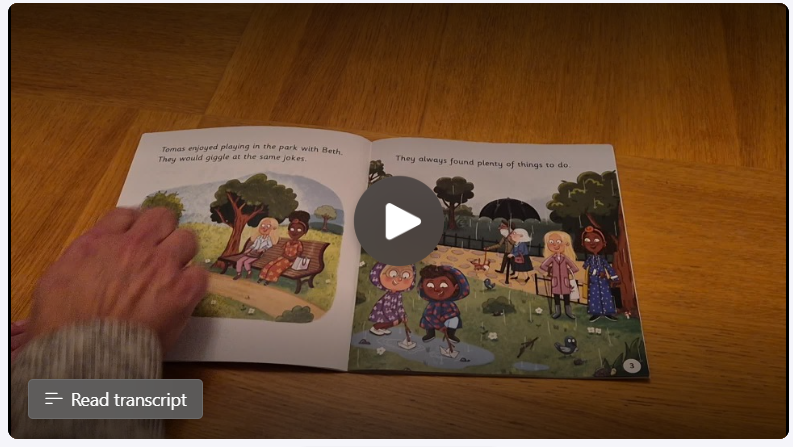
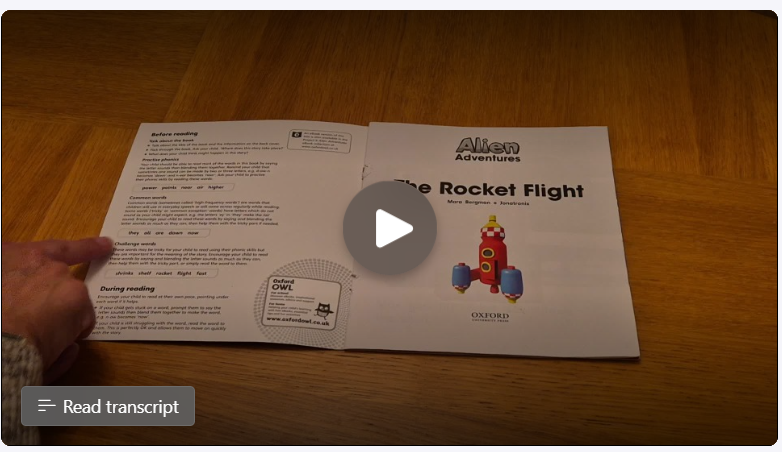
Further information can be found by clicking on the images below to see how Numbots and TTRS can be used by your child.

Reading
Reading is a core fundamental skill which helps children access the wider curriculum. By regularly reading, 4 times a week, children are able to practice and improve their skills including fluency and comprehension. Even 5 minutes a day will have a big impact!
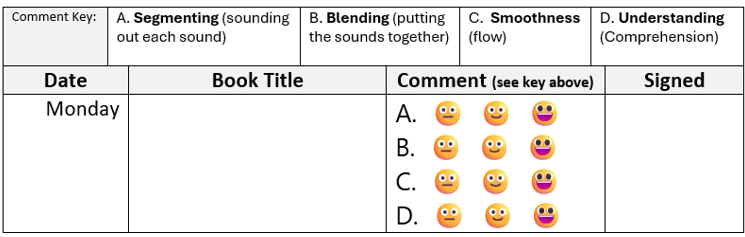
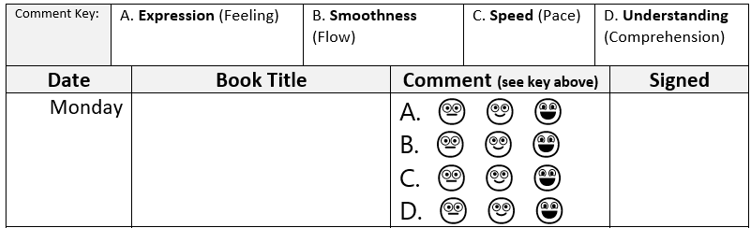
Our updated reading records contain suggested questions you could ask as well as word lists for each year group that children are expected to be able to read and spell. When reading with your child, please tick or circle the reading comment(s) that your child has demonstrated.
EYFS
Within EYFS, our focus in on phonics and being able to segment (break) a word into the individual sounds, before blending (pushing) the sounds together to read the word e.g. c-a-t = cat building up to words with sounds made by two or more letters e.g. ch-air = chair. These skills are essential to being able to read successfully. We also encourage children to read smoothly by practising the book in class before sending home.
KS1 & 2
In Key Stage 1 and Key Stage 2, there is a focus on four core skills needed to be a reader for pleasure.
- Expression – pitch, volume and tone of voice
- Smoothness – read text with limited errors
- Speed – reading accurately more quickly (90 words per minute at Year 3)
- Understanding – explain or talk about what was read
KS1 books sent home will be familiar to the children and they should be able to read with limited pausing to segment and blend.

50 Things To do Before You're 5

Quick Links
Privacy & Cookie Policy
Terms & Conditions
© Copnor Primary School 2026. Website Designed by The Collective